Event
Curator Talk
Next: Thursday 29th October
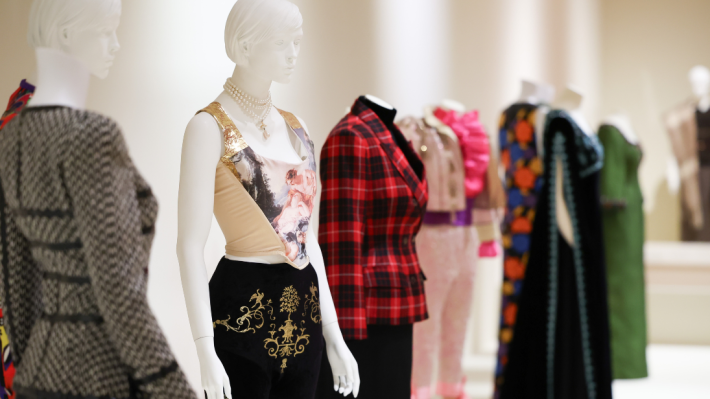
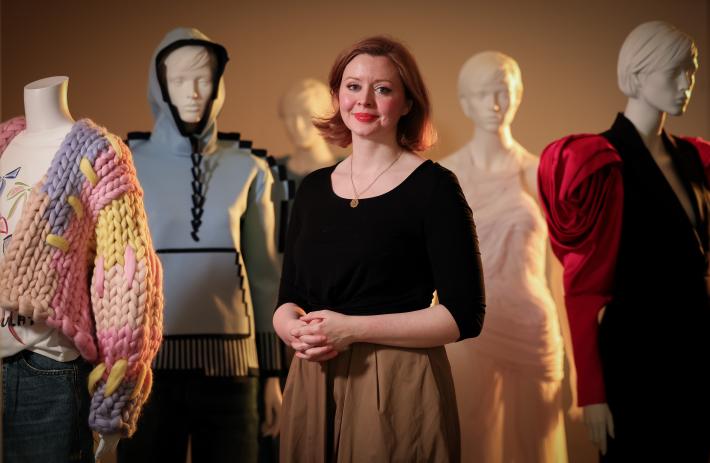
Ashes to Fashion curator, Charlotte McReynolds, leads a behind-the-scenes tour exploring the exhibition. Discover the remarkable fashion and stories now on display.
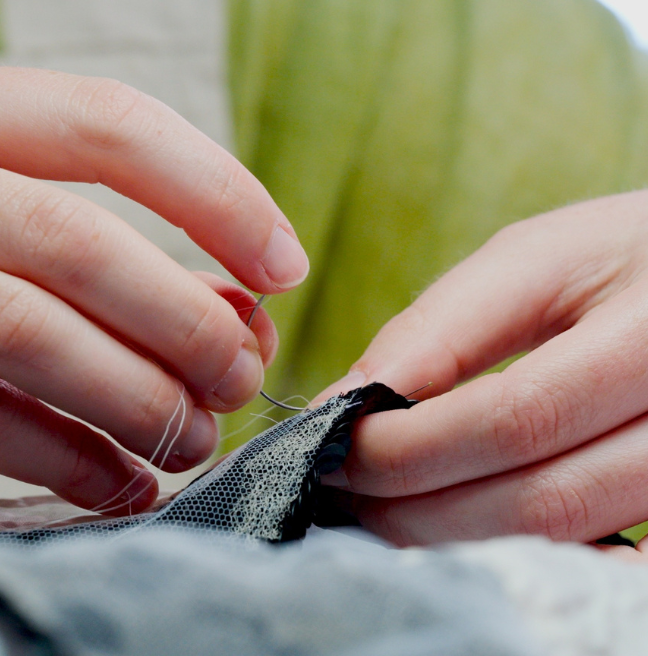
Book TicketsObject Conservator Bethany Skuce discusses the challenges of working on the delicate Charlotte Duclos evening dress made from gelatine sequins.
Evening dress
Charlotte Duclos
1909
Gelatin sequins, silk
Worn by Mary Joy Newland (1883–1960), an American railroad heiress of Irish origin, who married the Dutch Count Julius Menno Frederik David van Limburg Stirum et du Saint Empire (1877–1954), of one of the oldest noble families of Europe, in 1908.
The sequins of the dress are an early form of plastic made of gelatin. Manufacturers in France started to produce gelatin sequins in the 1890s and they quickly became popular as they were lightweight, could be coated in any colour, and made into any size or shape. However, they are very difficult to clean and will melt if exposed to heat, or dissolve if exposed to sweat or rain.
Donated 1988 by Ms Patricia Mencarelli
BELUM.T3003
Object Conservator Bethany Skuce discusses how conserving a garment can connect you with its original creator while working on the Noblewoman's Dragon Robe.
Noblewoman's Dragon Robe, or Longpao
Unknown maker
1850-before 1901
Silk satin weave, silk embroidery
This exquisite robe was one of the very first pieces to be donated by a member of the public to the Ulster Museum following the Malone House fire in 1976. It once belonged to Galway-born Doctor Andrew Irwin (1846-1901), who is said to have been gifted it by the last Dowager Empress Cixi of China in gratitude for exceptional medical services. After his death, it was passed to wife Annie Irwin, born in County Down. By the 1970s, it belonged to a friend of the Irwin family who, upon hearing about the Malone House fire and destruction of the costume and textile collection, decided to offer it to the Ulster Museum.
Dragon robes were worn on formal occasions by high-ranking members of the Chinese Imperial family during the Qing dynasty (1636-1912). It features nine five-clawed dragons indicating that this robe could only be worn by a high-ranking member of the imperial family. It also features multicolour clouds, bats, waves and rocks all above wavy lishui stripes.
Donated by Sarah G. Erskine, 1976
BELUM.T158
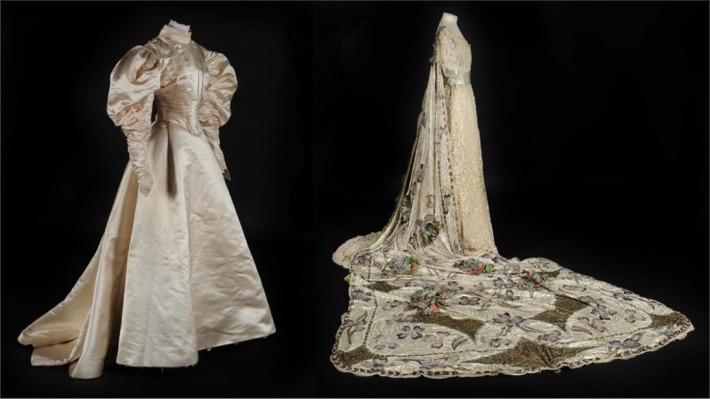
A remarkable donation: two gowns that once belonged to the Scottish-American textile heiress, Elizabeth Balfour Clark (1870-1926).
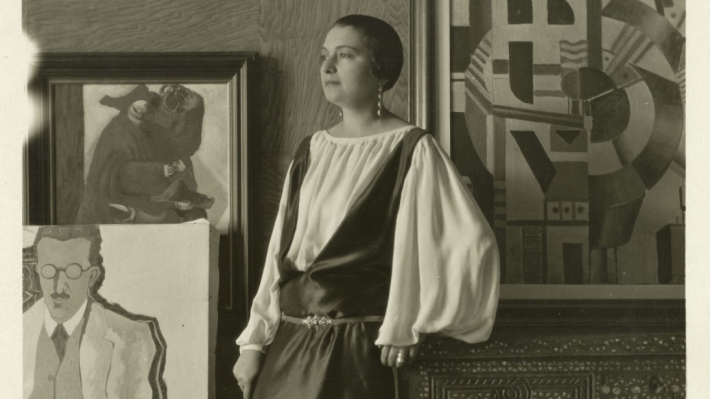
The three fascinating women behind one beautiful cloak. Written by Curator of Fashion and Textiles, Charlotte McReynolds.
On 11th November 1976, a devastating fire at Malone House led to the near-total loss of the original costume and textile collection. Fifty years on, it’s time to celebrate a collection reborn.